
re:Invent 2025 is here and this is your one stop for news, updates and more.
Team Tealium will be going live all week, posting live updates to this blog post, and sharing news on our social accounts to keep you in the loop the whole time.

It’s just after lunch and re:Invent is in full force.
The expo hall opens at 4pm pacific time but the ads around town have made it clear this conference is all about AI. And I’m sure the booths and vendors here are going to be saying the same thing.
Good data is the key to good AI so it’ll be interesting to see what everyone is announcing this week.
Stay tuned for more and don’t forget to catch our livestream preview tonight at 7pm with Ravit from The Ravit show! Join the live tonight – here.
I’ll be live tomorrow and Wednesday too bringing you news and updates from around Las Vegas.
3:57pm
Lining up for the Expo Hall to open. Can you believe this is the front of the line?

Day 1 Recap & Highlights (Watch Here)
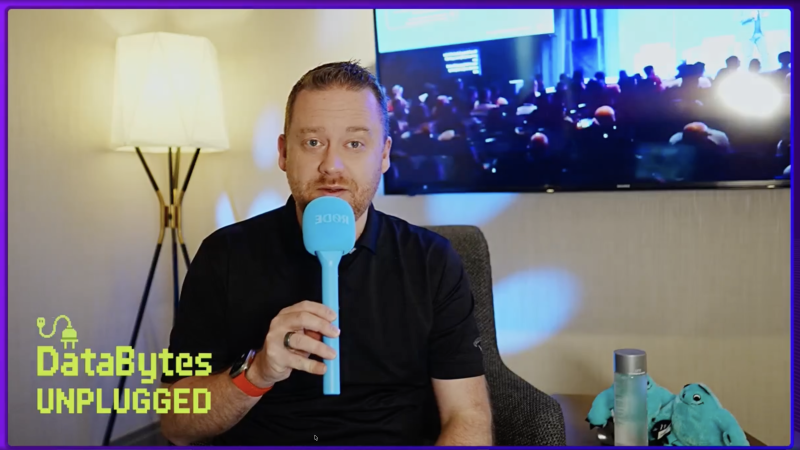
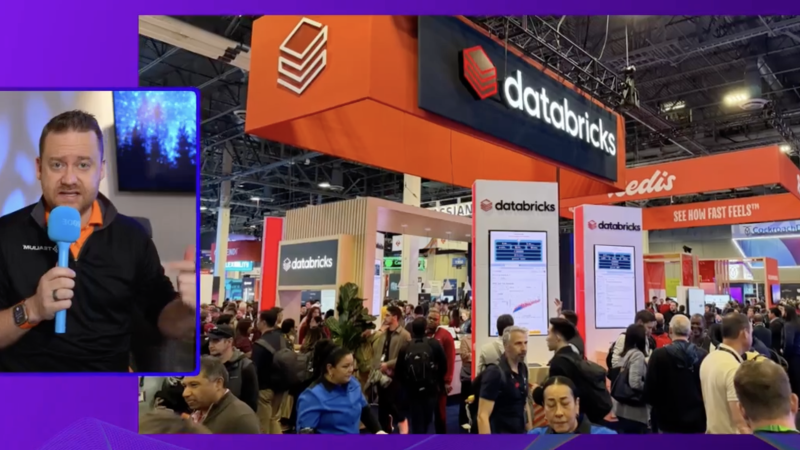
Field Notes From re:Invent: What AWS’s Agentic Push Really Means For Customer Data
I took a mobile studio to Las Vegas for re:Invent 2025.
Four livestreams in three days. A Sony camera on a travel tripod. A hotel suite that turned into a control room. And a Las Vegas that had barely recovered from F1 before over sixty thousand cloud and AI nerds like me showed up with backpacks and hoodies.
Here’s my take on what I saw last week at re:Invent
⸻
From “Play With AI” To “Operate With Agents”
The last three years of AI feel like very distinct phases.
Phase 1: Access
Everyone just wanted a login. Give me ChatGPT, Claude, any model that lets me poke it with prompts and watch something magical (or weird) appear in the text box. This was the novelty phase.
Phase 2: Usefulness
We realized raw models were not enough. We needed tools, plugins, APIs, and protocols like MCP to let AI touch the systems where work actually happens. The excitement shifted from clever prompts to integrations.
Phase 3: Agents
Once you give models tools and access to data, they start doing things for you. Writing emails, filing tickets, summarizing calls, booking meetings. We started talking less about chatbots and more about copilots.
Phase 4 is where re:Invent 2025 planted its flag:
AI is moving from loose experiments to industrial scale agents that need control, policy, and optimization.
The story on stage was not “look, a new model”. It was “here is the stack you will need when you have thousands or millions of agents in production and you actually need them to behave”.
That shift is important, because the hard part is no longer the model. It’s:
- What agents are allowed to do
- What data they can touch
- How you measure performance over time
- How you keep them from going off the rails
Which is exactly where customer data, consent, and governance come crashing into the AI party.
The Announcements That Matter
You can read a feature by feature recap on the AWS blog. I am going to zoom in on the pieces that actually change the work of data, marketing, and AI leaders.
Nova 2 and Nova Forge: Custom Brains, Not Just Bigger Ones
AWS rolled out the Nova 2 family as the new backbone for many of these agentic ideas.
You will see the usual benchmarks and claims about reasoning, multimodal input, and price performance. Important, but not the interesting part.
The more interesting move is Nova Forge.
Nova Forge is essentially AWS saying:
You should not have to build a whole research lab to get a model that understands your domain.
Instead of forcing every enterprise to fine tune models at the edges in ad hoc ways, Nova Forge offers a more structured path:
- Take a strong base Nova model
- Use teacher models and your own domain data
- Train a Novella student model that understands your products, policies, and vocabulary
For customer data leaders, this matters because your agents will not be reasoning over generic internet knowledge forever. They need to understand your catalog, your offer structures, your consent policies, your risk thresholds.
Nova Forge is one way AWS is trying to make that practical instead of purely aspirational.
The Agentic Stack: Frontier Agents and Bedrock AgentCore
The headline demos were the Frontier agents.
- A security agent that hunts threats
- A DevOps agent that fixes issues
- Kiro as a more general example of what a long running agent can look like inside an enterprise
These are not five second chat completions. These are agents that can run for minutes, hours, even days, calling tools, touching systems, and collaborating with humans.
Behind them sits Bedrock AgentCore.
If Nova is the brain, AgentCore is the nervous system and the rulebook.
AgentCore brought three concepts to the front:
- Policy. What is this agent allowed to do, with which systems, under which rules. And yes, in natural language, but backed by enforceable constraints.
- Evaluation. How do we know if an agent is doing a good job? What does success look like? How do we test changes before they go live?
- Memory. How does an agent accumulate experience over time instead of treating every request like day one?
If you are serious about agents, you need an orchestration and control plane, not just a chat interface.
Infrastructure That Changes The Math
Some announcements will not make headlines on LinkedIn, but they will change how you architect AI and data.
A few that stood out:
- Trainium3 UltraServers and Graviton5. More compute for training and serving, with a focus on cost per unit of useful work, not just raw speed.
- S3 Vectors and massive objects. Vector search is now a first class citizen in S3, and single objects can grow up to 50 TB. That matters if your retrieval strategy involves huge catalogs, long histories, or media heavy content.
- Lambda Managed Instances and durable functions. You get the serverless feel, but with more control and the ability to run long workflows that can pause and resume over months. That fits very nicely with complex multi step AI workflows.
Individually, each of these feels like an infra-nerd feature. But really they are the scaffolding for the next generation of AI powered applications.
The Tech Debt Reality Check
One of the most honest parts of the week was the focus on tech debt.
It is fun to talk about agents that can rebuild your call center. It is less fun to admit that half of your critical processes still run on a mainframe app that no one is allowed to touch.
AWS Transform is a direct swing at that problem: agent assisted modernization of legacy applications, including mainframes and ancient Windows stacks.
The live demo where an agent essentially pulled apart an old system and refactored it into something modern was a nice bit of theater, but it also captured a hard truth:
You do not get the AI future you want if your tech debt is still running the show.
From my seat, this is one of the biggest parts of many AI conversations with enterprises right now. The ambition is high. The stack is old and slow, lacking real-time access to data. Something has to change.
⸻
My final take from re:Invent
Walking the expo floor, one thing was obvious: the mix of people is changing.
Yes, there are still plenty of core AWS personas, but I also saw a lot more data science, data engineering, analytics, and even more CX leaders.
And increasingly, there is a new type of person I think of as a translator.
These are people who speak enough infra to follow a Graviton roadmap, enough analytics to argue about attribution, and enough marketing to understand why a broken signup flow is worse than a slow query.
At re:Invent, they are the ones filling up the AI and data sessions, trying to figure out how to turn all this capability into customer outcomes.
Sony’s “Kando” Moment
One of the more surprising moments of the week came from Sony.
They talked about the concept of “kando”. Roughly translated, it is that deep, emotional resonance you feel when a piece of art or an experience truly moves you.
I was literally using a Sony camera to stream this conference about industrial AI, and here was Sony reminding everyone that the point of all this tech is still to create human connection.
It surfaced a tension that more of us need to say out loud:
If we are not careful, we can deploy agents everywhere and still end up with experiences that feel generic, transactional, and hollow.
The Reality Behind Customer Data
Over Black Friday / Cyber Monday at Tealium we saw a 15% increase in event volume and a 36% increase across all of November.
Pair that with the tech debt conversation from the keynotes and you get a pretty blunt equation:
Demand and complexity are rising + Rule based systems and old architectures are straining x Agents and AI enhanced workflows offer a way forward – But they collapse quickly on bad data, broken governance, and legacy constraints
This is why so much of re:Invent felt like an AI conference wrapped around a modernization conference, whether it used that language or not.
There Will Not Be One Agent To Rule Them All
What we are actually seeing, and what re:Invent reinforced, is a mesh of specialized agents.
An agent that understands weather and logistics for shipping
An agent that specializes in inventory and pricing
An agent that understands loyalty, consent, and entitlements
Agents embedded in email tools, personalization engines, call centers, analytics platforms
They will talk to each other. They will collaborate. But they will not merge into a single omniscient entity.
That creates a new class of problems when the agents all need access to real-time, consented customer data.
This is where Tealium lives.
For years, we’ve emphasized the essential customer data layer: one that captures real-time behavioral data across web, app, and all other touchpoints; resolves identity to link events to people and accounts; centrally manages consent; and orchestrates clean, governed data to all tools.
In an agentic world, that same layer becomes the broker between agents and customer reality.
One of the clearest demonstrations of this idea is in the contact center.
Amazon Connect was everywhere in the narrative this year, especially in scenarios like fraud detection.
The demo looked like this:
- An AI agent begins the interaction using natural language.
- The agent authenticates, gathers context, and runs initial checks.
- When necessary, the AI hands off a summarized, high-context view to a human agent.
Integrating Tealium into this loop allows you to:
- Incorporate pre-call web and app behavior
- Include sentiment and past purchase history
- Ensure compliance with consent and communication preferences across all channels
The result is not just a smarter bot. It is a smarter combined system where the bot and the humans share a unified view of the customer.
That is the kind of architecture that turns the announcements on stage into actual experience improvements.
There is an old line in marketing that “content is king”. In an agentic world, I would update it to:
Context is king.
Agents do not just need more tokens. They need meaningful, structured, governed context about the customer and the situation.
AWS is giving you powerful ways to store and retrieve that context through things like S3 Vectors and knowledge bases.
Tealium gives you a way to define, collect, and govern the customer side of that context in a way that is repeatable and compliant.
Put those together, and you have a path to agents that do not just answer questions, but act in ways that are consistent with your brand, your risk posture, and your promises to customers.