GDPR Compliance
The data governance opportunity from the General Data Protection Regulation and what to do about it


The is European legislation meant to consolidate data privacy regulations across Europe. Despite being based in the EU, GDPR requirements affect companies worldwide who are doing business in the EU or monitoring the behavior of EU citizens. Companies found in non-compliance are subject to administrative fines of €20mil or 4% of worldwide revenue, whichever is greater.
In the News:
CDO Trends: GDPR Can Make Data Sharing, AI a Minefield
CMSWire: Now’s the Time for Marketers to Embrace Zero-Party Data
JD Supra: China’s GDPR is Coming: Are You Ready?
Learn More

Attribution Comes Last
Companies often justify investments in first-party data by promising better attribution. They want to know which marketing dollars are working and which aren’t. It’s a fair question, but there are often more immediate problems to solve. I have built and commissioned more marketing measurement work than I can count: last-touch and multi-touch attribution, media mix […]
It Was Never First-Party vs Third-Party Data
The industry turned data strategy into a loyalty test: first-party good, third-party suspect. That distinction tells us surprisingly little about why a campaign performs. The more useful question is whether different sources can be connected to the same person and used responsibly to make better decisions. In 2024, I worked with a national Medicare organization […]
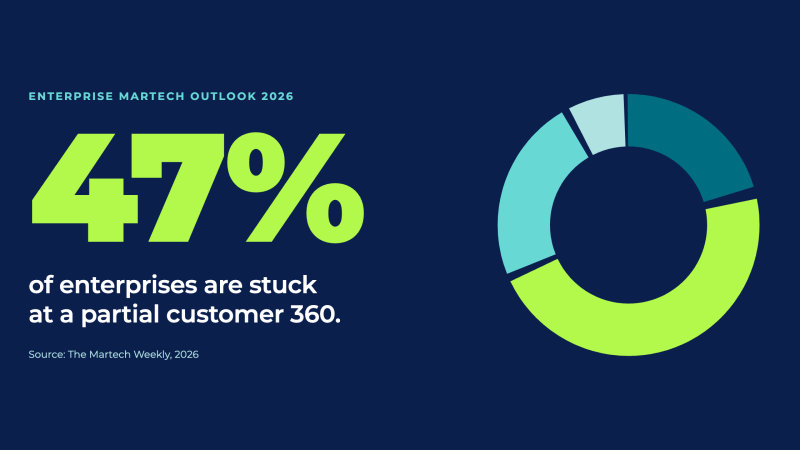
What does your customer view actually need? A look into the Enterprise Martech Outlook
A customer once told me they needed to run an abandoned-cart campaign. The catch was that they had about three minutes to act. Once someone left their app, that person could be buying lunch somewhere else within three to five minutes. An offer arriving an hour later would miss the mark entirely. A business can […]
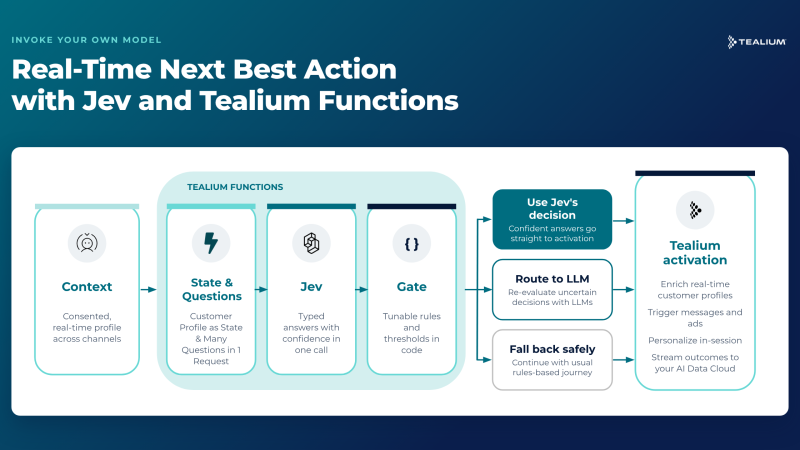
Real-time Next Best Action with Jev and Tealium Functions
Real-time customer decisioning has long involved tradeoffs among speed, flexibility, and cost. Large language models can reason over detailed customer profiles, but invoking one for every event adds cost and latency. Traditional ML models offer fast, predictable inference, but typically require training for each decision and a deployed serving endpoint. An alternative is to ask […]
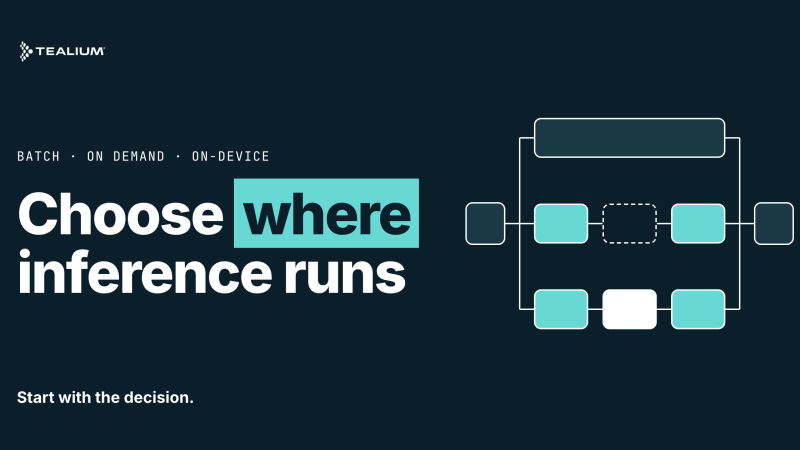
Choosing Where Inference Runs: A Practical Cost Model for Real-Time Customer Context
A customer score has value when it changes a decision. A score calculated in advance, stored for days, and never used still consumes compute and creates data that your teams must retain and govern. As customer experiences move closer to real time, the design question is no longer just which inference to run. It is […]
A New Front Door for Discovery is Opening. Introducing ChatGPT Pixel and CAPI
For years, discovery started in a search box. You had a question, typed it into Google, compared a few results, and eventually landed on someone’s website. More of that now happens in a chat window. People describe a problem, ask follow-up questions, and narrow their options, sometimes without ever seeing a results page. With ads […]